
FIB UNDIP – The phenomenon of the popularity of Japanese anime and manga in Indonesia is no longer just an entertainment trend. Indonesia is even recorded in the top five of the world with the largest number of anime and manga fans. This deep interest in pop culture turns out to be the entrance as well as the main driver for many young people to pursue the study of Japanese Language and Culture at the university level.
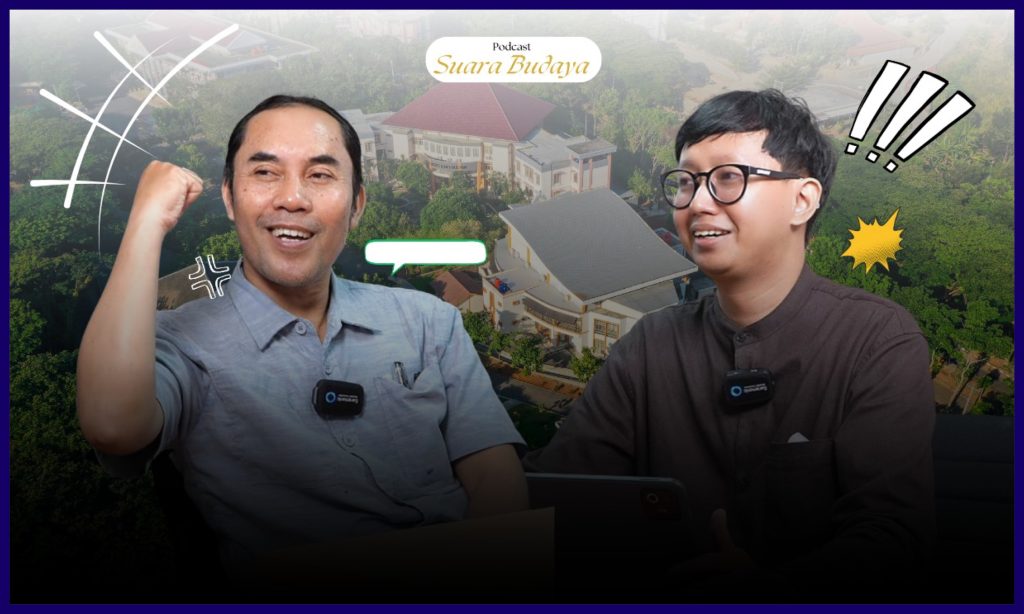
Seeing the enthusiasm, the Head of the Japanese Language and Culture Study Program (BKJ) FIB UNDIP, Budi Mulyadi, S.Pd., M.Hum., is back in the latest episode of the Suara Budaya Podcast on the YouTube channel @Fakultas Ilmu Budaya Undip. In this heated discussion, Sensei Budi dissects the history of manga, the philosophical value behind popular stories, to the opening of promising career opportunities in the creative industry for graduates.
Effective Self-Taught Learning Media
Sensei Budi revealed that the love of reading manga and watching anime proved to be a very effective means of self-study. Through this interactive media, students can hone their listening skills (choukai), enrich their daily conversation vocabulary (kaiwa), to understand the use of Kanji characters contextually.
“Many of our students started from the hobby of watching anime and reading comics, then their language skills developed rapidly until they succeeded in passing the Japanese-Language Proficiency Test (JLPT) level N3 or N2,” explained Sensei Budi.
Tracing the History and Uniqueness of Modern Manga
Dissecting the history, the forerunner of manga in Japan has existed since the 8th century through scrolls of ancient fable stories. The term manga itself became popular in the Edo period (18th century) and developed rapidly after World War II, especially after being pioneered by the legendary figure Osamu Tezuka through his iconic work, Astro Boy.
Different from western comics or animation, the Japanese manga and anime industry has its own visual characteristics, such as expressive eye shapes and storylines with innovative plot twists. The choice of genres is also very diverse, ranging from environmental issues, culinary exploration, horror, to daily life dramas. Full support from the Japanese government also makes this sector a cultural diplomacy tool (soft power) as well as a pillar of a solid global creative economy.
Emulating Ganbaru Philosophy and Bushido Discipline
Behind the entertaining storyline, anime and manga slip strong life philosophy values. One of the main principles that is most often raised is Ganbaru (がんばる), which is the spirit of never giving up, toughness, and hard work not to back down in the face of all obstacles.
In addition, Bushido’s ethical values such as discipline, honesty, loyalty, and solidarity with each other are often instilled in their characters. The interest is, this cultural relationship takes place in two directions, namely Sensei Budi mentioned that the Japanese people really admire the character of the Indonesian people who are friendly, warm, and easy going.
Promising Career Opportunities in the Cross-Country Creative Industry
The market demand for professionals who master the Japanese language and culture in the creative sector is increasing. FIB UNDIP Japanese Language and Culture Study Program Alumni are not only absorbed in manufacturing companies or government agencies, but also penetrate the national and international creative industries.
Some strategic career opportunities that are wide open include:
- Comic & Script Translator (Translator/Subtitler): Translate comic scripts, manga, and animation shows officially.
- Creative Profession & Voice Actor (Seiyuu/Dubber): Become a talented voice actor and production concept designer.
- Creative Entrepreneurship: Some alumni even succeeded in establishing animation studios and agencies in Central Java and East Java which established direct production collaborations with agencies in Japan.
- By pocketing a JLPT certification of at least N3 or N2, graduates have strong capital to achieve a professional career with a high standard of appreciation in the global arena.
Watch more on YouTube @Fakultas Ilmu Budaya Undip: https://youtu.be/IkWygilwEbU