
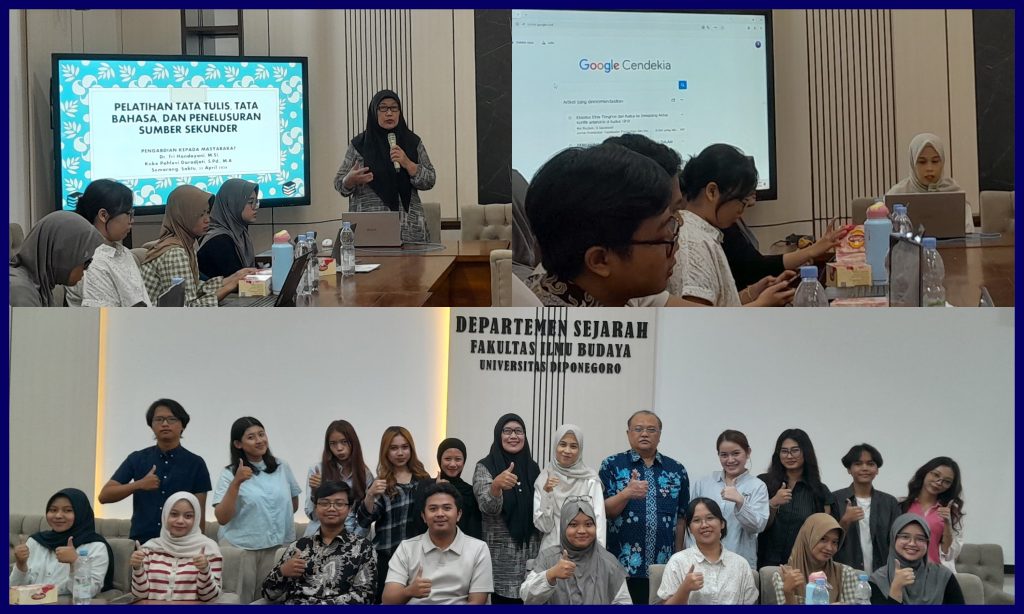
FIB UNDIP – The academic world, especially in the field of history, demands high accuracy not only in capturing facts, but also in narrating them systematically. Realizing the importance of this matter, the team of lecturers of the History Study Program of the Faculty of Cultural Studies, Diponegoro University (FIB Undip) held a Community Service activity that focused on strengthening the capacity of students in processing research data.
The activity entitled “Writing Training, Grammar, and Secondary Source Search” was successfully held on Saturday, April 25, 2026, in the Session Room of the History Department of FIB Undip.
Sharpening Pen and Research Sharpness
This training is guided directly by two competent lecturers in their fields, namely Dr. Tri Handayani, M.Si., and Keke Pahlevi Daradjati, S.Pd., M.A. During the session that lasts from morning to noon, students are invited to delve into standard but flexible writing techniques, as well as effective strategies in sorting out credible secondary sources.
The ability to trace secondary sources becomes a very crucial material in the current era of information flooding. Students are provided with practical ways to do validation so that the historical narrative that they build later has a solid academic foundation and can be held accountable.
Academic Display and Participant Appreciation
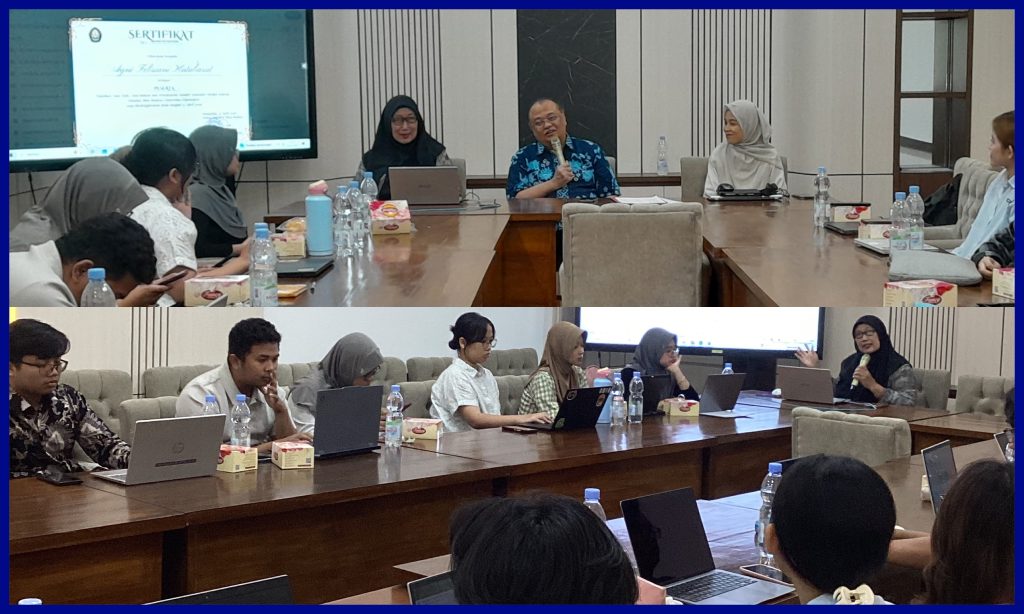
Also present on this occasion, the Head of the History Department of FIB Undip, Prof. Dr. Drs. Dhanang Respati Puguh, M.Hum. In his speech, he gave a deep speech to the participants. He emphasized that proficiency in grammar and sharpness in tracing sources are the main “weapon” for a young prospective historian.
This activity was enthusiastically followed by 20 selected students from the 2024 and 2025 classes. As a form of appreciation for their learning spirit, every participant present is entitled to receive an official certificate from the department.
Towards a Better Quality History Writing
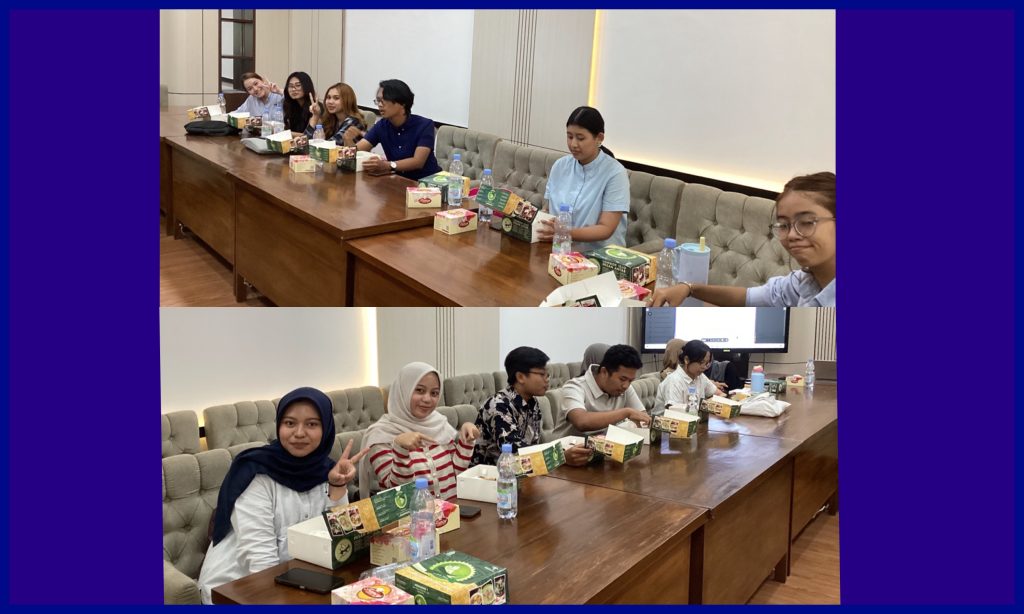
Through this training, great hope is pinned so that students of the History study program are not only proficient in field research, but also excel in pouring ideas into neat and elegant scientific writings. The synergy between lecturers and students through service activities like this is expected to continue for the sake of the progress of humanities studies in the Cultural Campus environment.